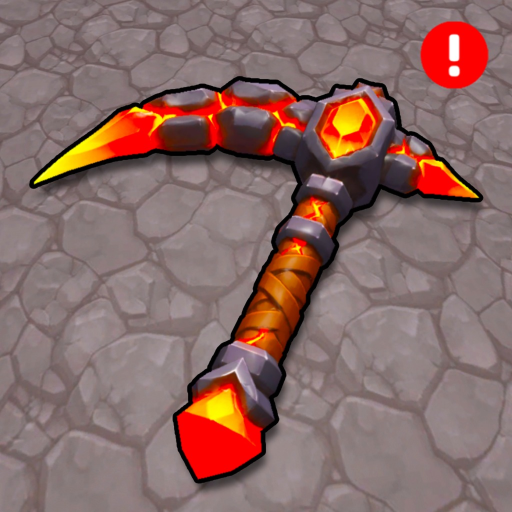
Pickaxe Tycoon Beginner Guide: Mine, Merge, and Progress
Use this Pickaxe Tycoon beginner guide to learn the verified mine, deposit, collect, buy, merge, chest, and tower progression loop in order.
This Pickaxe Tycoon beginner guide starts with the part that matters most: learning the small production loop before chasing the bright pickaxes on the upper wall. The verified flow is straightforward. You buy a pickaxe, let it mine, collect the ore, deposit that ore into the converter, collect the resulting money, and reinvest. Merging turns accumulated pickaxes into stronger tiers, while dropped chests offer another route to obtain tools.
The game can look busy because ore, cash, chest decisions, purchase buttons, multipliers, and the growing tower all compete for attention. Treat them as one connected system. Your current pickaxes create ore; the converter turns that ore into spending power; spending adds more tools or unlocks a chest; merging compresses those tools into better tiers. When you understand where that chain is slow, the next choice becomes much easier.
Your first complete mining cycle
Begin at the purchase area and buy the first pickaxe the live interface allows. It appears on the working wall and begins producing ore. Walk through the dropped pieces to collect them, then carry the load to the deposit or smelting area. Wait for processing and collect the money at the cash point. Do not confuse ore waiting to be processed with money ready to claim; both can create a visible backlog, but they require different actions.
Repeat the cycle several times before changing anything. Watch whether ore piles up near the pickaxes, waits inside the converter, or processes cleanly while your cash remains uncollected. Those observations tell you whether your attention, converter speed, or pickaxe output is the immediate bottleneck. The first goal is not a particular currency total. It is a loop you can run without wondering where the value went.
This video shows the same buy, collect, deposit, collect-money, chest, and merge sequence. Use it to recognize the stations, then follow the labels in your current server if the interface has moved.
Reinvest without breaking the loop
Money has competing uses, so every purchase should answer a visible problem. More pickaxes increase the amount of ore entering the system. A converter-speed upgrade helps when unprocessed ore is the queue. A chest can award an extra pickaxe, but it asks for a live cash amount that may not match an older video. Saving for a chest while leaving the basic production wall nearly empty can slow the route; buying endlessly while the converter is backed up can do the same.
Use a short observation window before spending. Clear the floor, deposit everything, collect the cash, and watch one fresh batch move from pickaxe to payout. If the converter stays idle, more production is useful. If ore is waiting, compare the live upgrade cost with another batch of pickaxes. If both parts run smoothly, a chest or tower goal becomes easier to save for.
- Buy only after you know which stage is limiting progress.
- Keep enough cash to continue the basic loop after an optional chest decision.
- Read the live price and effect text instead of copying a number from a recording.
- Change one part of the setup, then observe another complete cycle.
- Collect waiting cash before deciding that production feels slow.
| What you see | Likely bottleneck | Safe next check | Avoid |
|---|---|---|---|
| Ore scattered on the floor | Collection attention | Collect and deposit the current batch | Buying while value remains uncollected |
| Ore waiting at the converter | Processing throughput | Read the live converter upgrade | Assuming an old upgrade price |
| Converter is often empty | Pickaxe production | Compare another purchase with your reserve | Saving so long that the wall stays idle |
| Cash is ready but progress feels slow | Unclaimed payout | Collect money before measuring the loop | Judging earnings from the ore pile alone |
| Several duplicate tools are owned | Tier compression | Use Merge and observe the new output | Expecting an unverified final tier |
Merge, chests, and early tiers
Once enough pickaxes are present, use the Merge control. Accepted gameplay repeatedly shows merging basic tools into Stone, with Stone identified as tier two. Later observed steps include Iron at tier four and Titanium at tier five. Those confirmed labels are useful landmarks, not a promise that every name, intermediate tier, or production value is unchanged. The live wall is the final reference for the current sequence.
Merging is a trade: you reduce the number of separate tools while producing a stronger tier. Judge the result by the whole loop rather than the color of one pickaxe. Collect a clean batch before merging, merge once, and then observe another clean batch. That comparison is more reliable than trying to remember how fast the previous wall looked.
Chests appear as another acquisition path. The accepted recordings show dropped chests requiring in-game money to unlock and awarding pickaxes, including an Iron result in one session. They also show that a chest can be discarded. This makes a chest a decision, not an automatic command to stop all progression. Read its current price, consider the strength of your regular production, and decide whether waiting blocks the next useful purchase.
Build toward the tower instead of a number
The official game description frames the long-term goal as building a giant mining tower and collecting every pickaxe. Accepted gameplay also shows progress beyond the first wall to another pickaxe floor. It does not provide a dependable full floor order or permanent unlock-price table, so use visible expansion points as checkpoints rather than following a fixed numeric roadmap.
A practical tower rhythm is to stabilize the current floor, upgrade the weakest part of the ore-to-money chain, merge when duplicates support it, and then save for the next visible expansion. After an unlock, walk the new space before spending again. Identify where new pickaxes work, where ore lands, and whether the same collection route still makes sense. The best route is the one that keeps value moving instead of forcing you to cross the plot for every small pickup.
For a first session, aim to finish with knowledge as well as progress. You should know where to buy, where to collect and deposit, where money is claimed, how Merge changes the wall, what a chest asks for, and which visible tower goal comes next. Those landmarks remain useful even when an update changes a cost.
Verify current labels and prices in the official Roblox experience before committing a long session to any saved target.
FAQ
What should I buy first in Pickaxe Tycoon?
Buy the first pickaxe shown by the live purchase control, complete the ore-to-money cycle, and reinvest after seeing where the current bottleneck is. A fixed old price is less useful than the current button and your actual queue.
When should I merge my pickaxes?
Merge after you have accumulated the required duplicates and can observe the result. Compare one clean production cycle before and after the merge so you understand how it changed your wall rather than relying on appearance alone.
Are chests required for early progress?
The evidence confirms that chests are an optional way to obtain extra pickaxes and that they require money to unlock. The basic buy, mine, convert, and merge loop still provides the foundation, so do not freeze that loop solely to chase an expensive chest.
How do I know when to expand the tower?
Use the next visible expansion in your live plot as the goal. Stabilize ore collection and processing first, then expand when the unlock will not leave the existing production chain unattended or permanently cash-starved.